


Written by Elizabeth Williams-Drueding, DO | June 18, 2026
Summer brings longer days, outdoor activities, vacations, and opportunities to stay active. While spending time outside can be great for both physical and mental health, warmer temperatures also increase the risk of heat-related illness and sun damage.
Understanding how to recognize heat illness, protect yourself from UV exposure, and care for those who may be more vulnerable can help you enjoy summer safely.
Understanding Heat Illness
Our bodies are remarkably good at regulating temperature. However, during periods of extreme heat, especially when humidity is high, the body’s cooling mechanisms can become overwhelmed. When this happens, heat-related illnesses can develop.
While anyone can experience heat illness, some people are at higher risk than others.
Who Is Most Vulnerable?
Individuals at increased risk include:
- Adults over age 65
- Infants and young children
- People with heart disease, lung disease, or diabetes
- Individuals taking certain medications, including diuretics (“water pills”), some blood pressure medications, and certain psychiatric medications
- Outdoor workers and athletes
- People who live alone
During heat waves, it is important to check on family members, friends, neighbors, and community members who may be more vulnerable. A simple phone call or visit can help ensure they have access to hydration, air conditioning, and support if needed.
Recognizing the Warning Signs of Heat Illness
Heat-related illness exists on a spectrum, ranging from mild conditions to life-threatening emergencies.
Mild Heat Illness
Heat Rash
Heat rash often appears as small itchy or painful bumps and typically develops in areas where sweat becomes trapped against the skin.
Heat Cramps
Heat cramps are painful muscle spasms that commonly affect the legs, arms, or abdomen during or after activity in hot weather.
Heat Swelling
Also called heat edema, this condition can cause swelling of the hands, feet, or ankles during periods of prolonged heat exposure.
Heat Exhaustion
Heat exhaustion is more serious and requires prompt attention.
Common symptoms include:
- Heavy sweating
- Weakness or fatigue
- Headache
- Dizziness or lightheadedness
- Nausea or vomiting
- Cool, pale, clammy skin
- Muscle aches
- Fast, weak pulse
People with heat exhaustion often feel very ill but are usually still alert and thinking clearly. Without treatment, heat exhaustion can progress to heat stroke.
Heat Stroke: A Medical Emergency
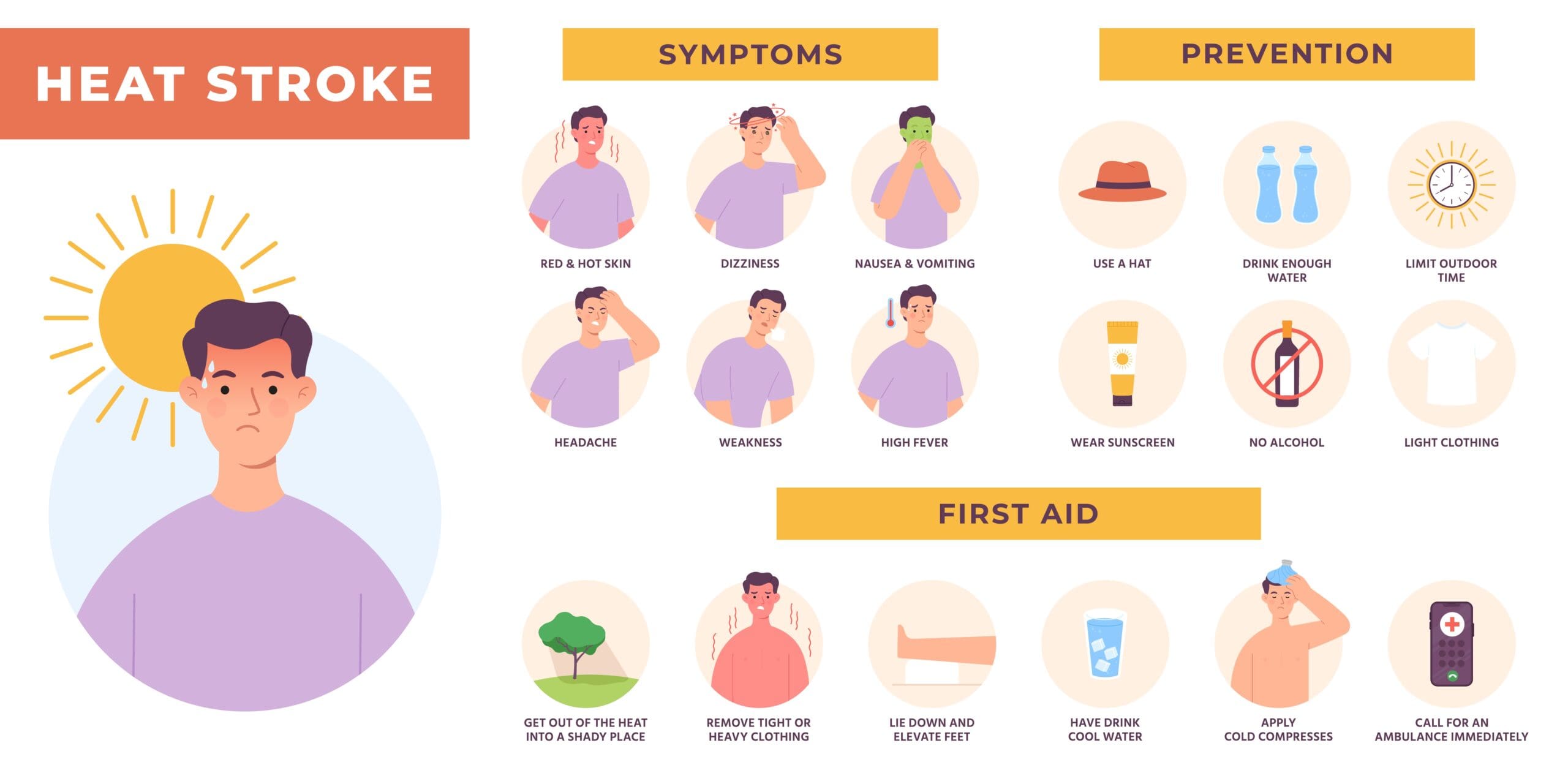
Heat stroke is the most severe form of heat illness and can be life-threatening.
Warning signs include:
- Body temperature above 104°F (40°C)
- Confusion, agitation, or unusual behavior
- Slurred speech
- Seizures
- Loss of consciousness
- Hot skin that may be dry or sweaty
- Rapid, strong pulse
If heat stroke is suspected, call 911 immediately.
How to Prevent Heat Illness
Fortunately, many heat-related illnesses can be prevented with a few simple precautions.
Stay Hydrated
Drink water regularly throughout the day, even before you feel thirsty. By the time thirst develops, mild dehydration may already be present.
Limit excessive alcohol intake, which can contribute to dehydration and impair the body’s ability to regulate temperature.
Plan Outdoor Activities Wisely
Whenever possible, schedule outdoor exercise, yard work, and recreational activities during cooler morning or evening hours.
If you must be outside during the hottest part of the day, take frequent breaks in shaded or air-conditioned areas.
Dress for the Weather
Choose lightweight, loose-fitting, light-colored clothing that allows heat to escape and sweat to evaporate more effectively.
Never Leave Anyone in a Parked Vehicle
Temperatures inside a parked car can rise rapidly, even when outdoor temperatures seem moderate. Never leave children, older adults, or pets unattended in a vehicle.
What To Do If Symptoms Develop
If you begin experiencing symptoms of heat exhaustion:
- Move to a cool or shaded location.
- Stop physical activity.
- Drink cool water or an electrolyte-containing beverage.
- Loosen or remove excess clothing.
- Apply cool, wet towels to the skin.
Seek medical attention if symptoms do not improve within 30 minutes, worsen, or if confusion develops.
Remember UV Protection
Heat and sunshine often occur together, but ultraviolet (UV) rays can damage your skin and eyes even on cool or cloudy days.
Repeated UV exposure increases the risk of sunburn, premature skin aging, and skin cancer.
Sunscreen Basics
Choose a broad-spectrum sunscreen with an SPF of 30 or higher.
For best protection:
- Apply sunscreen 15 to 30 minutes before going outdoors.
- Reapply every two hours while outdoors.
- Reapply sooner after swimming, excessive sweating, or towel drying.
- Use approximately one ounce of sunscreen (about a shot-glass full) to adequately cover exposed skin.
Many people apply too little sunscreen, reducing the level of protection they receive.
Sunscreen and Bug Spray: Which Goes First?
Summer activities often require both sunscreen and insect repellent.
If you are using both products:
- Apply sunscreen first.
- Allow it to absorb for approximately 15 minutes.
- Apply insect repellent second.
When sunscreen needs to be reapplied, you do not automatically need to reapply bug spray. Follow the instructions on the insect repellent label, as its duration of protection may differ from your sunscreen.
Protect Your Eyes, Too
Your skin is not the only body part vulnerable to UV damage.
Long-term UV exposure can increase the risk of cataracts and other eye conditions.
When outdoors:
- Wear sunglasses that block 99% to 100% of UVA and UVB rays.
- Choose wraparound styles when possible for additional protection.
- Consider wearing a wide-brimmed hat to help shield your eyes, face, ears, and neck from direct sunlight.
Enjoy Summer Safely
Summer is meant to be enjoyed. Whether you are exercising outdoors, spending time at the beach, attending sporting events, or simply enjoying a walk around the neighborhood, a few simple precautions can go a long way.
Stay hydrated. Recognize the warning signs of heat illness. Protect your skin and eyes from UV exposure. Most importantly, remember to check in on friends, family members, and neighbors who may be more vulnerable during periods of extreme heat.
By taking these steps, you can enjoy everything summer has to offer while keeping yourself and those around you healthy and safe.
Medical Disclaimer: This article is for general educational and informational purposes only and is not a substitute for individualized medical advice, diagnosis, or treatment. Reading this content does not establish a physician patient relationship with Active Health DPC or its physicians. Always consult a qualified healthcare professional regarding your specific health needs. If you believe you are experiencing a medical emergency, call 911 or seek immediate medical care.
