


Written by Elizabeth Williams-Drueding, DO | June 11, 2026
The idea of detecting cancer through a simple blood test is understandably exciting. Multi-cancer early detection (MCED) tests are an emerging area of medicine designed to identify signals of cancer before symptoms develop. While this technology is promising, it is also important to understand where the science currently stands, including both its potential benefits and its limitations.
At the time of writing, these tests are still evolving and are not considered replacements for standard cancer screening methods such as mammograms, colonoscopies, Pap smears, or low-dose CT lung screening.
What Are Multi-Cancer Detection Tests?
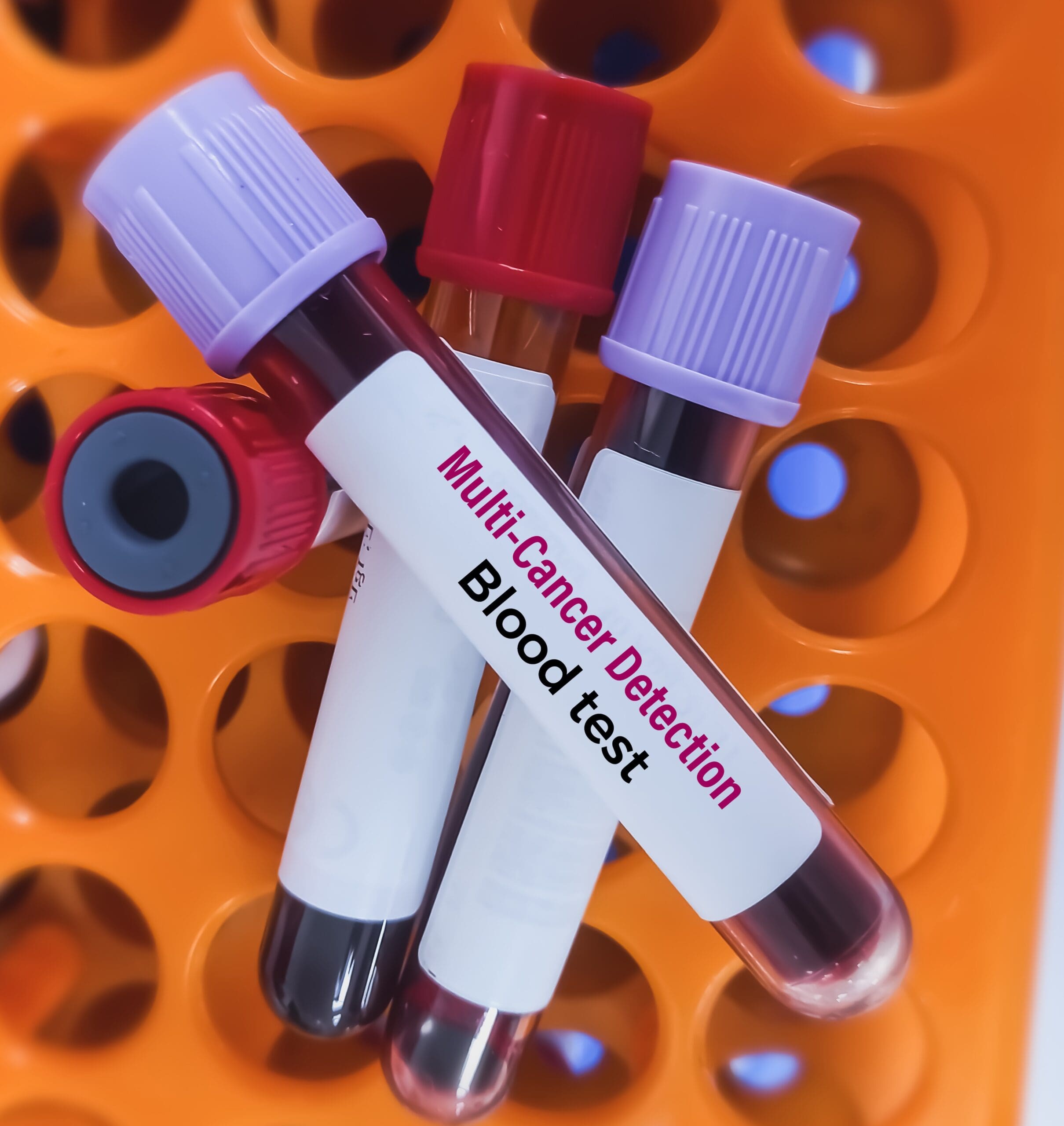
Multi-cancer detection tests are blood tests designed to look for signs of multiple types of cancer from a single blood sample.
Two of the most recognized tests currently available are:
- GRAIL’s Galleri test
- Exact Sciences’ CancerGuard-related technologies and other developing platforms
These tests are not yet part of routine national cancer screening guidelines, but they are becoming increasingly discussed in preventive medicine and oncology.
How Do These Tests Work?
MCED tests primarily work by analyzing tiny fragments of DNA circulating in the bloodstream. These fragments are called cell-free DNA (cfDNA). Some of this DNA may come from cancer cells.
Rather than simply looking for mutations, many modern MCED tests analyze methylation patterns on DNA fragments.
What Are Methylation Patterns?
Methylation is a normal biological process in which small chemical groups called methyl groups attach to DNA. These methylation marks help regulate which genes are turned “on” or “off.”
Cancer cells often develop abnormal methylation patterns. Different cancer types can create different methylation “signatures,” which researchers attempt to identify through blood testing.
The goal is not only to detect whether a cancer signal may be present, but also to predict where in the body the signal may be originating. Currently, this predicted tissue or body-region information is primarily offered through the Galleri test. With CancerGuard-related testing, a positive result does not currently identify a likely body region.
What Is the Goal of These Tests?
The primary aim of MCED testing is to detect cancers earlier, ideally before symptoms develop and when treatment may be more effective.
One of the most appealing aspects of these tests is the possibility of identifying cancers that currently lack routine screening methods, such as:
- Ovarian cancer
- Pancreatic cancer
- Certain gastrointestinal cancers
- Some head and neck cancers
This concept is what makes the technology so compelling. Earlier detection could potentially improve outcomes for cancers that are traditionally diagnosed at later stages.
However, there are important limitations patients should understand before pursuing testing.
Important Limitations of MCED Testing
False Positives Can Occur
A false positive means the test detects a “cancer signal,” but the person does not actually have cancer.
For example, approximately 1–2% of Galleri tests return positive for a cancer signal. Of those positive results, roughly 30% ultimately prove to be false positives. These means that if 100 tests are performed 1-2 of those tests will have a positive cancer signal. Of those positive tests, 3 out of 10 would be falsely positive when the person does not have cancer.
This means some individuals may undergo additional imaging, procedures, specialist consultations, or biopsies only to discover that no cancer is present.
That can lead to:
- Anxiety and emotional stress
- Additional testing costs
- Exposure to unnecessary procedures
- Incidental findings unrelated to cancer
False Negatives Can Also Occur
A false negative means the test is negative even though cancer is actually present.
This is critically important to understand. A negative MCED test does not guarantee that someone does not have cancer.
Some cancers may not shed enough detectable DNA into the bloodstream to be identified reliably.
Not All Cancers Shed Detectable DNA
One major limitation is that not all cancers release enough DNA fragments into circulation for these tests to detect.
For example, pancreatic cancer remains difficult to detect reliably with current MCED technology despite being one of the cancers many people hope these tests will identify earlier.
Detection rates vary significantly depending on:
- Cancer type
- Cancer stage
- Tumor size
- Individual biology
This means test performance is not uniform across all cancers.
These Tests Are Not Replacements for Standard Cancer Screening
At this time, MCED tests should not replace recommended evidence-based cancer screenings.
Individuals should still follow standard screening recommendations, including:
- Mammograms
- Colon cancer screening
- Cervical cancer screening
- Lung cancer screening when indicated
- Skin examinations and routine preventive care
A normal MCED result should never be interpreted as permission to skip established screening tests.
Despite these limitations, it is understandable why many individuals are interested in this emerging technology and want additional information about their health.
A Patient-Centered Perspective on Direct-to-Consumer Testing
Direct-to-consumer health testing continues to grow in popularity, and multi-cancer detection testing is part of that larger movement toward individuals wanting more information about their health.
We believe it is important for patients to have a full understanding of what these tests can and cannot tell us. While we acknowledge the current limitations of MCED testing, we also understand the motivation behind why many individuals are interested in gathering this information. For many people, the desire comes from wanting to be proactive about their health, especially when cancer has affected them personally or within their families.
At Active Health DPC, our goal is neither to dismiss emerging technology nor to overstate its capabilities. Instead, we believe patients deserve thoughtful conversations grounded in both science and context.
Healthcare decisions are rarely black and white, and these tests can sometimes create uncertainty that requires careful interpretation and follow-up. Whether someone is considering one of these tests, has already completed testing, or is trying to understand their results, we are here to help guide the next steps and support their health journey.
That support may include:
- Discussing whether testing is appropriate for an individual situation
- Reviewing results in context
- Determining when additional evaluation is or is not needed
- Helping patients avoid unnecessary panic or false reassurance
- Continuing evidence-based preventive care and recommended cancer screenings
As this field evolves, having a trusted physician relationship becomes even more important. Emerging technologies are most helpful when paired with individualized medical guidance, thoughtful interpretation, and ongoing longitudinal care.
The Bottom Line
Multi-cancer detection testing represents an exciting and rapidly developing area of medicine. The ability to potentially detect multiple cancers through a blood test may eventually become an important part of preventive healthcare.
However, current limitations are significant:
- False positives occur (test is positive but the person do NOT have cancer)
- False negatives occur (the test is negative but the person DOES have cancer)
- Some cancers are poorly detected
- Long-term outcome data is still being gathered
- These tests are not substitutes for guideline-based screening
- At the current rate of screening, it is unclear if cancers are being detected at earlier stages
For patients considering MCED testing, it is important to approach the decision with a clear understanding of both the promise and the uncertainty surrounding this technology.
This is an area of science worth monitoring closely. As more data emerges and technology improves, multi-cancer detection testing may ultimately become a valuable tool for select populations and specific cancer types. At the current stage of development, these tests should be viewed as an adjunct to, not a replacement for, standard preventive care and guideline-recommended cancer screening.
Medical Disclaimer: This article is for general educational and informational purposes only and is not a substitute for individualized medical advice, diagnosis, or treatment. Reading this content does not establish a physician patient relationship with Active Health DPC or its physicians. Always consult a qualified healthcare professional regarding your specific health needs. If you believe you are experiencing a medical emergency, call 911 or seek immediate medical care.
